

Iran: Those days and these days
From foreign dominance to independence in decision-making

From foreign dominance to independence in decision-making
Dr. Hossein Mohammadi Sirat, Assistant Professor of Political Science, Imam Sadiq (pbuh) University
Following the Islamic Revolution, the leaders of Iran have periodically issued messages to mark significant events in the nation’s historical calendar. Notably, this includes the recent message issued by Ayatollah Sayyid Mojtaba Khamenei, the Leader of the Islamic Revolution, on September 28, 2026, marking the anniversary of the onset of Iraq’s Imposed War against Iran in 1980. This message is subject to examination from various perspectives, including methodological and analytical dimensions.
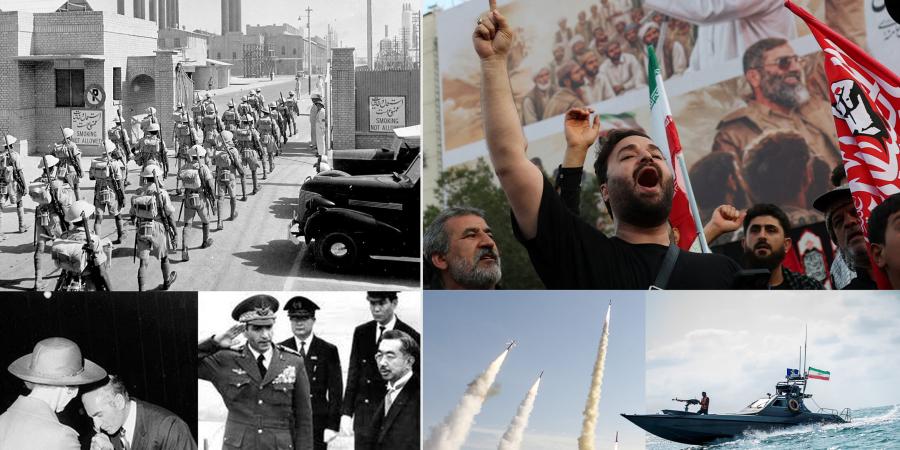
The message employs a comparative-historical methodology – an approach in which two or more periods, societies, or events are juxtaposed over time to illuminate their differences, similarities, causes, and consequences. In the Leader’s message, this comparison is clearly articulated through the dichotomy of "those days" and "these days." It contrasts Iran’s military capabilities before and after the Revolution, political dependence versus independence, Iran’s geopolitical standing in the Caspian Sea and the Persian Gulf, the disenfranchisement and powerlessness of the populace in the past versus their active social presence in contemporary Iran, and the status of Iranian women across both eras.
Those days
In their contemporary history, particularly during the Qajar and Pahlavi eras, Iranians endured bitter experiences of foreign interference and the curtailment of the nation’s political independence. The rivalry and interference of Russia and Britain, executed through unequal treaties, economic concessions, and the exertion of influence over domestic affairs, had constrained the scope of Iran’s national sovereignty.
Regarding that era, the Leader of the Islamic Revolution stated:
"Many had felt firsthand the brutal reality of what foreign domination over our nation's affairs had wrought upon the country. Yet the days preceding that era were dark and bleak, when ambassadors of the Arrogant Powers would dictate their demands and prohibitions to the Shah of Iran, and he would execute them – either willingly or reluctantly."
This interference persisted into the Pahlavi era as well. Foreign powers, particularly Britain and the United States, played a decisive role in the establishment, perpetuation, and ultimate fate of the regime, as well as in its macro-political decisions.
The establishment of the Pahlavi regime and the role of foreign powers
The Pahlavi era was exceptional in Iran's political history because, unlike preceding dynasties that largely emerged from internal struggles and domestic forces, its rise to power was accompanied by the direct interference of foreign elements. Numerous historical sources document the 1921 coup d'état and and Britain's role therein. For instance, Mahmoud Tolouei notes:
"To execute the coup plot, the British had several individuals under consideration, including General Homayoun, commander of the Cossack Division; Abdullah Khan Tahmasbi; and Reza Khan, the Amir Panjeh of Mazandaran. Ultimately, negotiations with Reza Khan regarding the execution of the coup proved successful."[1]
Ervand Abrahamian similarly notes:
"Prior to his march on Tehran, Reza Khan likely consulted with British officers in Qazvin, securing from them ammunition, provisions, and pay for his men."[2]
Malek al-Sho'ara Bahar also describes Reza Khan's ascent to power as follows:
"Reza Khan Mir Panj [a mid-level officer] among the Cossack ranks, was appointed commander of the Cossacks – the sole military force in Iran – with the assistance of Ironside (the commander of British forces in Iran). At Ironside's behest, he embarked on Tehran alongside Sayyid Zia'eddin Tabataba’i to establish a strong government. The capital, along with the forces stationed therein, fell into the hands of a faction that had sold itself out."[3]
Following the occupation of Iran during World War II, the country’s political fate was once again determined at the convergence of Soviet, US, and British interests. Reza Khan was forced into exile, and Mohammad Reza Pahlavi ascended to the throne with the explicit backing of the Allied powers.
The memoirs of General Hossein Fardoust provide a vivid portrait of the decisive role played by British officials in shaping Mohammad Reza Pahlavi's future. Regarding the final weeks of Reza Khan's reign and his own interactions with the Crown Prince, Fardoust writes:
"During the final two weeks of Reza Khan’s reign, I was embroiled in matters that were inextricably linked to determining the subsequent fate of the Pahlavi regime. My proximity to the Crown Prince, and his unique friendship with me, positioned me to assume the role of his liaison with British intelligence officials during this critical juncture. In those days, I was Mohammad Reza's sole confidant and closest friend.... On the afternoon of either the 31st of August or 1st of September, the Crown Prince told me: 'Go to the British Embassy today. There is a man there named Mr. Trott, who is the head of British intelligence in Iran and the second-in-command at the Embassy. He is fully apprised of the situation. Speak with him regarding my circumstances.'"
Mohammad Reza asked Fardoust to contact Trott that very same day. Fardoust contacted the British Embassy, and Trott instructed him to meet him that evening in Qolhak, at a location near the embassy premises. During this meeting, Fardoust introduced himself and explained that the Crown Prince had sent him to inquire about his fate and future. In response, Trott characterized Mohammad Reza as a German sympathizer, asserting that the British possessed documented intelligence from within the palace regarding his behavior. Upon returning to Sa'dabad Palace, Fardoust conveyed everything he had heard to Mohammad Reza.
Fardoust continues:
"'Well, if they didn't know these things, what good would they be?' I said.
'It must be the doing of these servants!' Mohammad Reza replied.
'Now, regardless of whose doing it is, do not concern yourself with that; what is your take of the main issue?' I asked.
'Contact Trott first thing tomorrow morning and arrange an appointment with him.' Mohammad Reza remarked. 'Tell him that I spoke with Mohammad Reza that very night, and he said that he would destroy the maps and would no longer listen to the radio, except for the stations that they themselves authorize.'"
Fardoust met with Trott again the following evening and delivered Mohammad Reza’s message.
"Well, let us see whether he is sincere in what he says or not," Trott said.
"When shall I see you next?" I asked.
"Whenever you want" he replied. "You can even see me tomorrow, but for the time being, I have no other answer to give you."
Following this meeting, Fardoust reported the conversation to Mohammad Reza. According to Fardoust, the Crown Prince immediately abandoned his radio and ordered the map, string, pins, and related items to be removed, ensuring that no such objects remained in his room. Mohammad Reza, who was immensely worried about his fate, instructed Fardoust to contact Trott once more to determine the outcome of his accession to the throne as soon as possible. He even feared the possibility that the British might replace him with his brother, Alireza.
A few days later, Trott summoned Fardoust again and remarked on Mohammad Reza’s conduct:
"Mohammad Reza has done what we suggested, and that is a good thing. Of course, we are not saying he should not listen to any radio at all – he may listen to whatever station he wishes – but the matter of the map was important to us: what was this fascination he had with the advance of German forces?!"[4]
This account is not merely an illustration of the relationship between British officials and the Crown Prince; rather, it provides a stark portrait of a reality in which the future of the monarchy and the personal conduct of the prospective king were subjected to the evaluation and direct intervention of a foreign intelligence officer.
The influence of embassies on macro-political decision-making
Foreign interference was not confined solely to the establishment of the Pahlavi regime; it persisted throughout its duration. The British Embassy wielded significant influence over the appointment or dismissal of Iranian prime ministers, cabinet ministers, and high-ranking officials, with the Shah himself routinely consulting the British ambassador. In the years leading up to the Oil Nationalization Movement, the role of foreign powers in opposing Dr. Mosaddegh’s government and championing their own preferred alternatives became equally evident.
In the final years of the Pahlavi regime, the role of the American and British ambassadors became particularly prominent. On January 3, 1979, William Sullivan, the last US Ambassador to Tehran, cabled a message to Washington:
"The decisive moment has arrived."
The Shah stood at a crossroads — flight or resistance. Sullivan argued that it must be assumed the Shah would soon leave the scene, and therefore "we must focus on how he departs." In the end, the Americans concluded that the Shah had to go — but that this must be conveyed to him in diplomatic language.
In his memoir, Sullivan writes: "Around this time, I received a message from Washington instructing me to meet with the Shah at the first opportunity and tell him that the government of the United States saw it in the Shah's personal interest, and in the broader interest of Iran, that he leave Iran as soon as possible... I conveyed the substance of Washington's message to the Shah with as much gentleness and kindness as I could... When I finished speaking, he turned to me and said, in a tone that was more or less pleading, 'Very well. But where am I supposed to go?'"[5]
The 28th of Mordad coup d'état
One of the clearest examples of foreign interference was the coup d'état of Mordad 28, 1332 [August 19, 1953] – a joint operation executed by US and British intelligence agencies to overthrow the government of Dr. Mohammad Mosaddegh. Declassified documents released by the US Department of State – including the Foreign Relations of the United States [FRUS] series – alongside archives made available by the National Security Archive at George Washington University, have thoroughly documented the planning and execution of this operation.
Consequently, "dependency" and "clientelism" are among the defining features that numerous scholars, including prominent Western academics, have employed to characterize the structural nature of the second Pahlavi state. Shapour Ravasani speaks of a "dependent state", Mark Gasiorowski describes it as a "client state" or "subservient state," and John Foran conceptualizes it as a "semi-peripheral state." Despite differences in their respective theoretical frameworks, these perspectives collectively underscore the decisive influence of foreign powers and the structural dependency inherent to the Pahlavi regime.
These days
Following the Islamic Revolution – and in stark contrast to the Pahlavi era, when the country’s foreign policy was formulated within a framework of dependency and alignment with foreign powers – Iran predicated its foreign policy on the core principle of "independence." Political decision-making was reoriented to align with Iran's national interests and sovereign boundaries, thereby endowing Iranian policy with an inherently endogenous character.
"These days," when Trump speaks of Iran's unconditional surrender, the martyred Leader of Iran responds by invoking the logic of Imam Hussain (pbuh):
"The Iranian nation is well-versed in its Islamic and Shia teachings. It knows what to do. Imam Hussain (pbuh) said, ‘Someone like me won’t pledge allegiance to someone like Yazid.’ What the Iranian nation is actually saying is that a nation like us – a nation with this culture, this history, and these lofty teachings – will never pledge allegiance to leaders like the corrupt people who are in power in the United States today."[6]
"Those days" the US ambassador determined whether the Shah of Iran should stay or depart; "these days," the Leader of Iran stands firm against the threats of the US President, defending the nation's sovereignty. When the Prime Minister of Japan brought a message from the US President to Iran, the Iranian Leader responded:
"I do not see Trump as worthy of any message exchange. I have no response for him, nor will I ever provide one."[7]
In the aftermath of the September 11 attacks, then-US President George W. Bush, with a distinct sense of arrogance in a press interview, declared:
"Iran must assist us in the war on terror. Our nation has only one doctrine in the war on terror: you are either with us or against us."
However, the response of Iran’s Leader stood in stark contrast to Bush's demand:
"...[He says that] anyone who is not with us – that is, with the US – is with the terrorists! This is a profoundly flawed statement. No, that is not the case. Many stand alongside the United States, yet are more dangerous than all the terrorists in the world. Today, the Israeli government harbors the most dangerous terrorists. Those who head this regime are individuals who personally ordered and participated in the most catastrophic terrorist acts, and even now they carry out assassinations daily while standing alongside America. Therefore, it is not true that whoever is with you is not with terrorists. Absolutely not; the most ruthless and malevolent terrorists are currently standing right beside you. The converse is equally false: [that] whoever is not with us is with the terrorists. No, we are not with you, nor are we with the terrorists."
An early example of this independence of judgment can also be observed in the initial years of the Revolution. Following the seizure of the US Embassy, Jimmy Carter addressed a letter to Imam Khomeini and dispatched special envoys to meet with him. Refusing the meeting, Imam Khomeini issued the following directive in response:
"It has come to my attention that President Carter’s special envoys are en route to Iran, intending to travel to Qom to meet with me. Therefore, I deem it necessary to state that the US government, by harboring the Shah, has declared its overt opposition to Iran. Furthermore, as has been established, the US Embassy in Iran has served as a hub for our enemies to conduct espionage against the sacred Islamic movement. Consequently, a meeting with me is under no circumstances possible for these special envoys. Moreover:
1. Members of the Islamic Revolution Council must, under no circumstances, meet with them.
2. No official has the authority to meet with them.
3. Should the United States extradite the deposed Shah – our beloved nation's number-one enemy – to Iran, and cease its espionage against our movement, the path to negotiating certain mutually beneficial relations will remain open. "
- Ruhollah al-Musawi al-Khomeini
What this comparison makes clear is the change in Iran’s position within the international order: once a country whose major decisions were influenced by foreign powers, Iran has, since the Revolution, become an actor that has made independence a core principle of its national security and foreign policy.
Regarding the distinction between "those days" and "these days," the Leader of the Islamic Revolution has stated:
"This comparison between the days of the past and the present can be further expanded upon, but in one word, I, as a servant of the dear people of Iran, declare that those bygone days to which our enemy longs to return have passed and will never be repeated."
[1] Mahmoud Tolouie, Father and Son, p. 44
[2] Ervand Abrahamian, Iran Between Two Revolutions, p. 106
[3] Mohammad-Taqi Bahar (Malek al-Sho'ara), Political Parties of Iran, Vol. 1, p. 34
[4] Hossein Fardoust, The Rise and Fall of the Pahlavi Dynasty, Vol. 1, pp. 100–103
[5] William Sullivan, Mission to Iran, pp. 208–209
[6] Excerpt of the martyred Leader of the Islamic Revolution's speech on Feb. 17, 2026
[7] Excerpt of the martyred Leader of the Islamic Revolution's speech on June 13, 2019